"A FIRE DEPARTMENT SAVED MY LIFE!"
/
In 1963, President Lyndon Johnson established February as National Heart Month. In the years since, the American Heart Association has designated February as an excellent time to learn the symptoms of a heart attack, participate in organized heart health walks, and make an appointment for a comprehensive physical. A spokesman for the AHA adds, “We actually would like this to happen all year long — not only in February.”
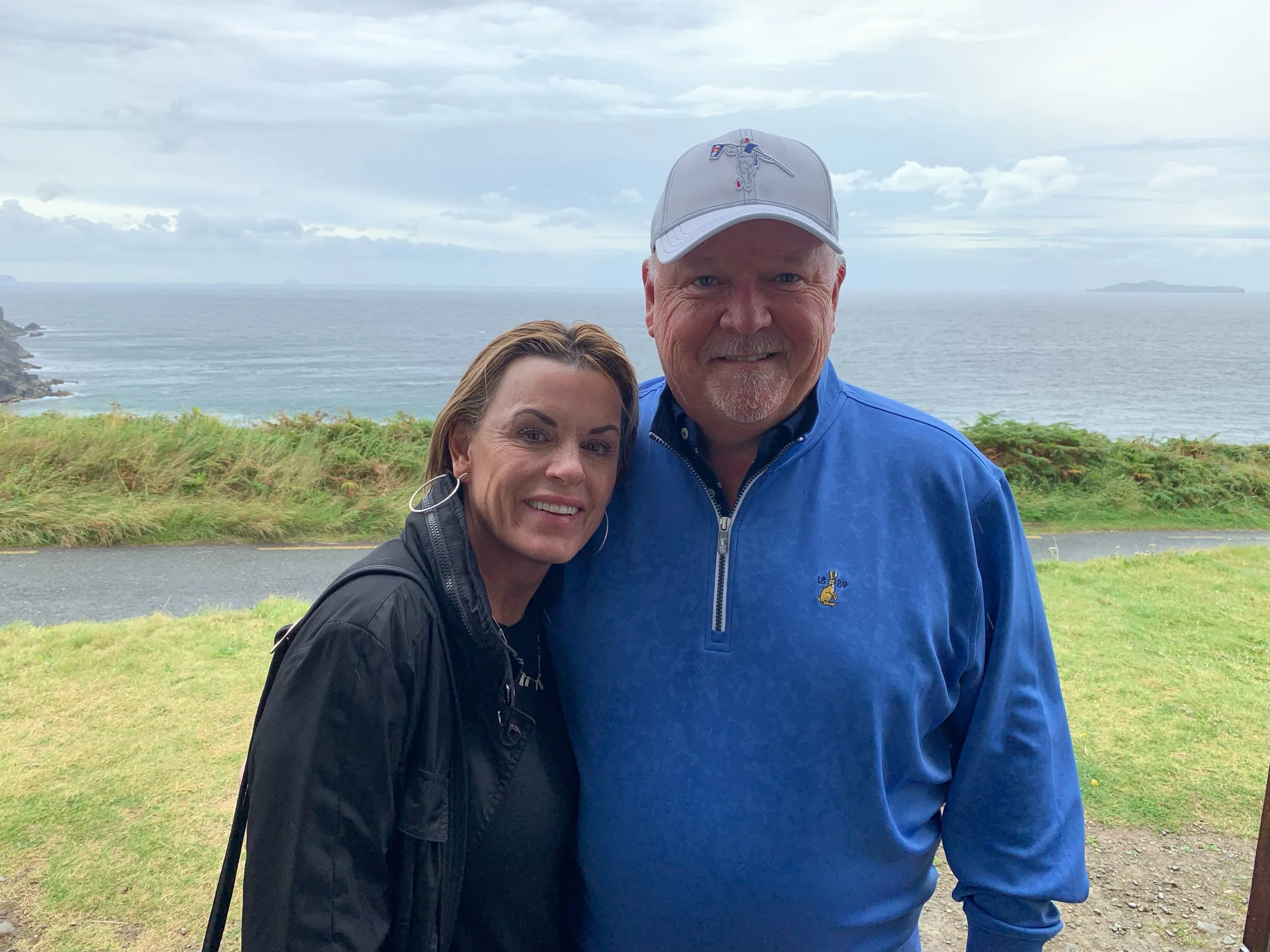
For John Crowley, who vacations frequently in Kennebunkport with his in-laws, Anne and Elliott Speers, these AHA caveats are now key to his daily regimen and routine. Last year, the 60-year-old director of operations for a fiber telecommunication infrastructure engineering company in Brea, California suffered a near-fatal heart attack.
He says, "A local fire department saved my life.”
On Friday, March 11, John was in his office preparing for a conference call with his team. He remembers looking forward to catching an afternoon flight to Denver for a relaxing and fun weekend with his family. But he also sensed something “unusual” and “different” was happening in his body.
The prior night, he and a work colleague had gone out to dinner. He says, “Later, as I was getting ready for bed, I felt some indigestion. I woke up several times during the night feeling ‘gurgling’ sounds in my chest, but I drank some water and tried unsuccessfully to go back to sleep.”
He wasn’t overly concerned.
Later that morning in the midst of the conference call, John felt the same gurgling sensation in his chest. “I asked the team to finish the call because I knew something was wrong. I began questioning whether I should phone 911 or do a little research first.”
He Googled “hospitals,” figuring he could probably drive to the nearest one, “but the only places that showed up on my phone were acute care locations and I didn’t think that was the best solution. I was worried that if I called 911 it might take the EMTs too long to find my third floor office in a confusing labyrinth of corridors. Then I remembered the fire station.”
Every day driving to work from his hotel (“my ‘home’ away from my home”), John passed the Placentia Fire Station #2. He recalled that it was less than half a mile from his office and believed he could get to the station faster than EMTs could get to him. “So I drove to the station, knocked on the front door, and what happened next saved my life.”
John was greeted by seven Placentia firefighters. “When I told them something was wrong with my heart, they opened the firehouse garage door and told me to have a seat. The team had just wrapped up training and still had their EKG gear open. One firefighter shaved my chest. Another attached leads and hooked me to the machine. Then I noticed that she looked at the Chief standing behind me and shook her head.”
“That doesn’t look too positive,” John said.
The firefighter replied, “Mr. Crowley, it appears you are having a heart attack right this second. We need to transport you to the hospital immediately.” The Chief called for an ambulance, adding “STAT!” Within minutes, John was on a gurney and loaded up for the seven-minute ride to St. Jude Medical Center.
During the ride he was given aspirin, four doses of nitroglycerin and finally morphine in an effort to keep his blood flowing. His blood pressure was a frightening 220/170. He also remember that the ambulance was going “very fast.”
Arriving at St. Jude’s ER portico, a swarm of medical professionals ran out and quickly examined John, “taking information, blood, scans, and God knows what else,” he says. The lead doctor confirmed what was feared at the firehouse: John was suffering a STEMI heart attack, meaning he had a completely blocked coronary artery.
He was whisked to the Cardio Lab where the director of cardiology explained he would be “going into an artery in my right arm, clearing out the blockage in my heart and installing a stent.” John was awake through the entire procedure and was told “what was happening” every step of the way.
Within 20 minutes after arriving in the Cardio Lab, the doctor’s work was done, blood was flowing and John was transferred to ICU where he stayed for the next 24 hours. “Amazingly, it was 75 minutes from the time I knocked on the fire station door until I was wheeled to the recovery room,” John notes.
The cardiologist called John’s wife, Whitney Speers Coviello-Crowley, in Denver. “If John hadn’t gone to the fire station when he did, there is a strong likelihood he would have died,” he told Whitney.
Two days later John was released from St. Jude’s Hospital. Three weeks later he was cleared to fly home to Denver.
“It’s been almost a year since this happened,” John says. “My general physical condition is excellent now and I’ve been given a clean bill of health from the cardiac surgeon, with no heart damage as a result of the STEMI. I watch my diet and limit sodium and fatty foods. I’m savoring life! I am an avid golfer and I enjoy daily biking and walking.”
He’s also one lucky guy.
——-
NOTE: February is American Heart Month, a time to focus on your cardiovascular health. The AHA suggests learning the symptoms of an attack, doing daily exercises, getting a comprehensive physical and signing up for a CPR class. FMI go to heart.org or call the AHA National Center at 800-AHA-USA-1