TAPPING TIME IN MAINE
/
Over centuries, maple syrup has been a Maine staple. Native North Americans used it as a sweetener. Early settlers also discovered a bounty in the prevalent sugar maple trees thriving on this rocky mountainous land. English chemist Robert Boyle wrote in 1663, “There is in some parts of New England a kind of tree whose juice that weeps out its incision, if it is permitted slowly to exhale away the superfluous moisture, then doth congeal into a sweet and saccharin substance.”
Undoubtedly, that liquid pleased pioneer settlers like the Bickmans, Cornforths, Meserves and Whitmores when they poured the elixir over their johnnycakes.
Today, Vermont Maid syrup is manufactured in New Jersey. (Ayup.) And our wonderful northern neighbor Canada produces most of the world’s maple syrup. But Maine is no slouch when it comes to this product. Here in the first place in the country to see the sun rise everyday, Maine boasts the third largest syrup industry among the states, producing 700,000 gallons annually.
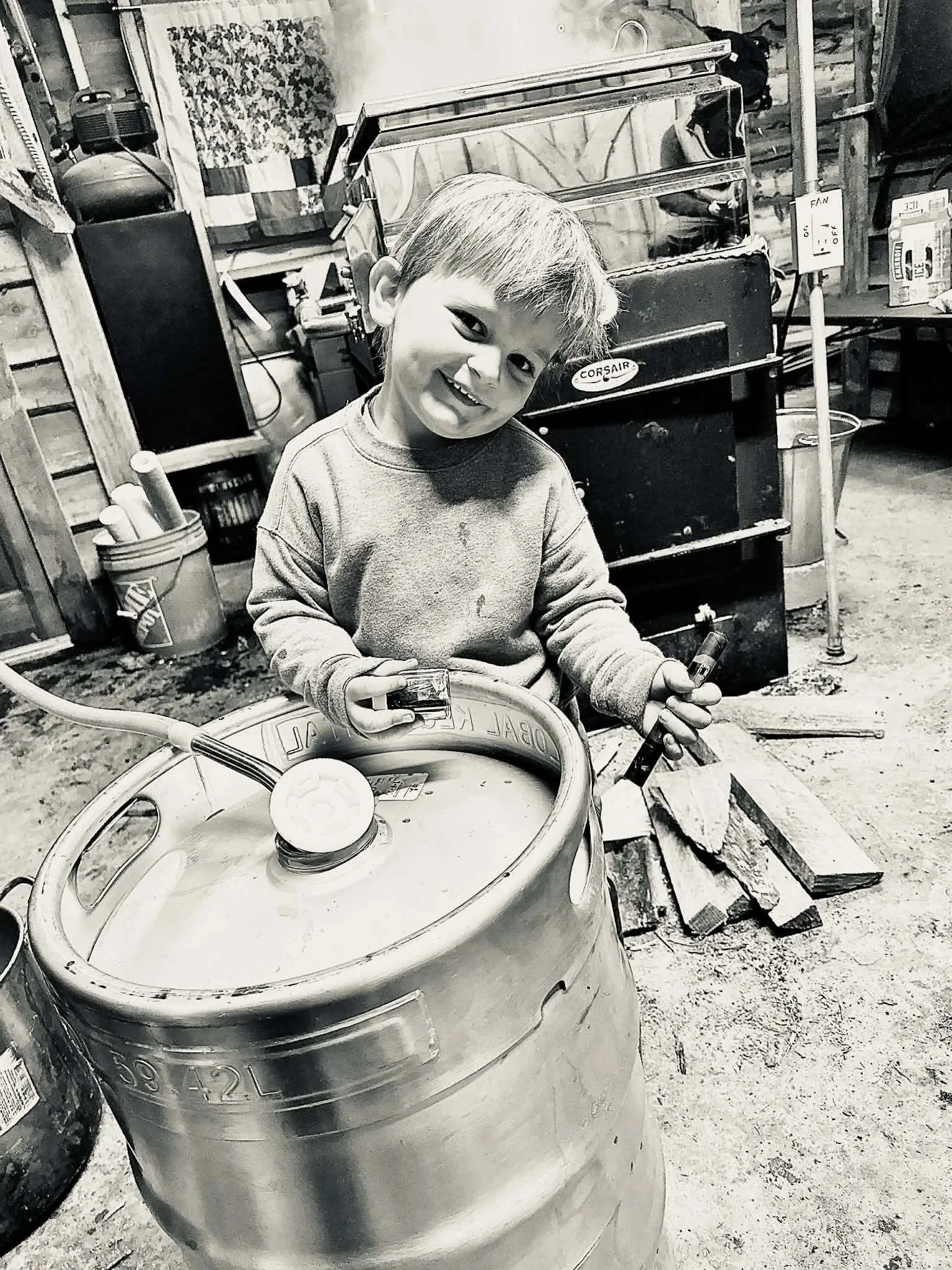
The art and craft of making maple syrup is a time-honored Spring tradition, captured in these photos of Mainer Casey Belanger and his young son Bo: a third generation sugar maker teaching a fourth generation sugar maker how to check the density of the finished maple syrup.
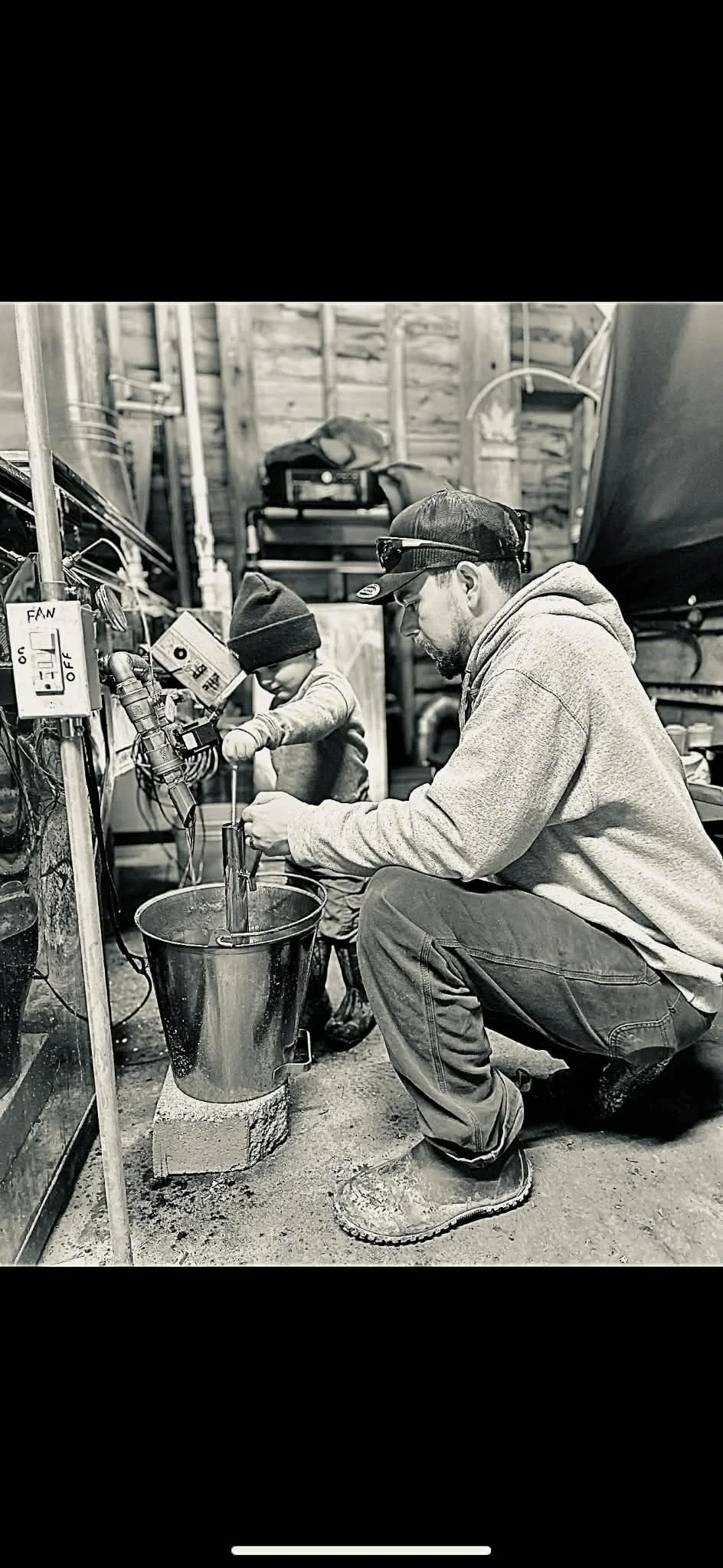
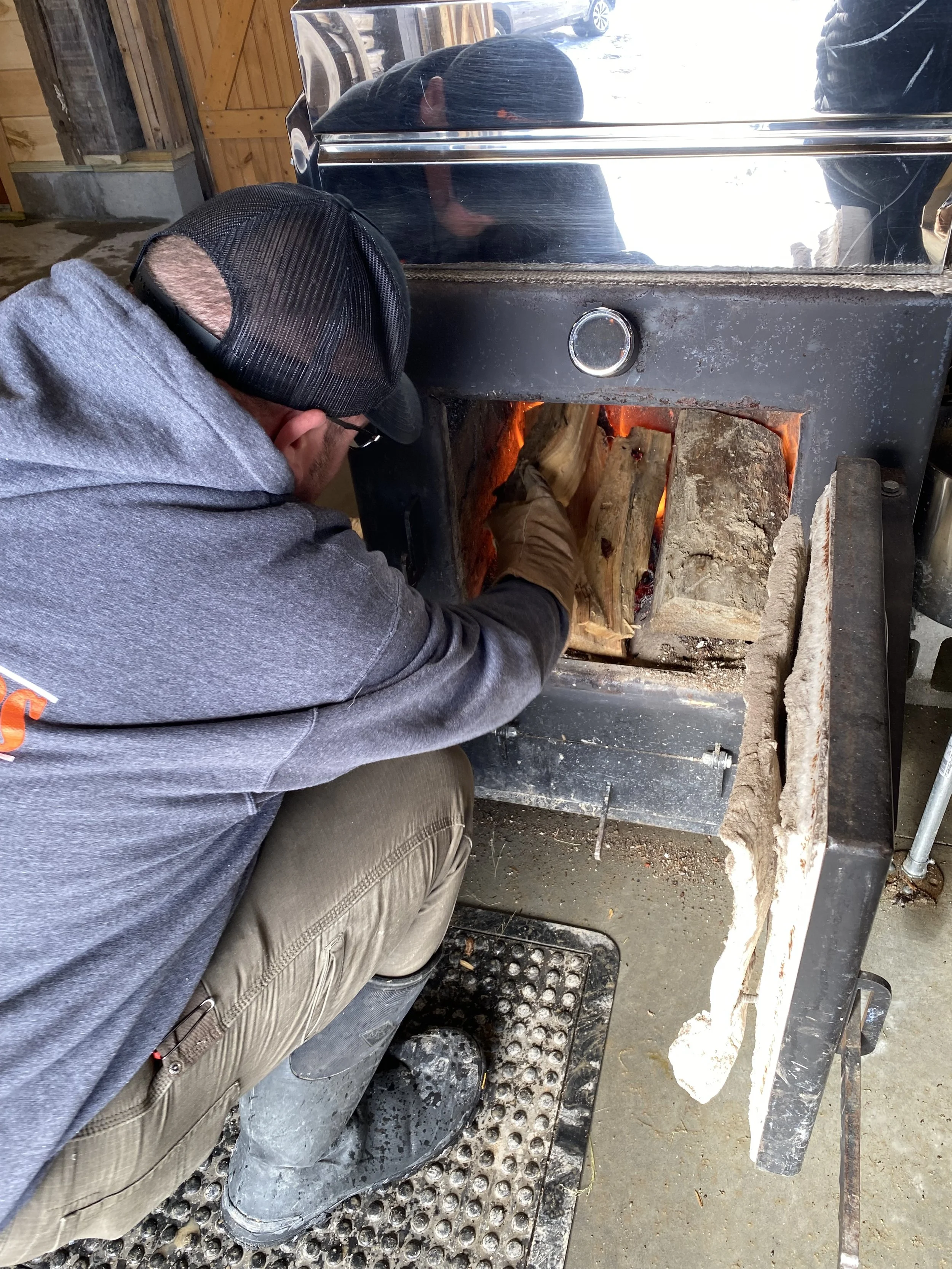
I’d always wanted to witness the process so on a recent 40 degree day I ventured deep into the Arundel forests to Casey Balenger’s spacious sugar house. As I stood amidst a steady cloud of steam rising from the wood-fired 1600-tank evaporator, I watched clear sap tapped from Casey’s sugarbush being processed and boiled down to yield approximately 30 gallons of maple syrup.
Tough work for some, but not for this third generation syrup maker who declares, “March is my favorite time of the year.” (A lot of Mainers I know spend this month forcing forsythia, inspecting muddy gardens for brave daffodil shoots, escaping lingering three-feet-high dirty snow drifts for a few weeks in sunny Vero Beach, or just plain wishing that winter was in the rear view mirror.)
Not Casey. “I don’t consider this a business,” he says. “It’s a hobby that supports me and it involves a mixture of family and friends who’ve become family. I’ve been doing it for more than 15 years now. I learned from my dad and uncle, and I want my kids to be working on this when they grow up so that they appreciate the tradition.”
Since those earliest days, the production of our favorite pancake topping has experienced few changes, other than the introduction of modern day machinery. The process starts when the sugar maples start flowing in mid-February or early March. Casey says, “It’s gotta be freezing at night yet with warm days over 30 degrees for the sap to flow.”
Making syrup “officially” begins after tapping and collecting sap, then straining to remove debris and impurities, boiling and “reducing,” testing for density to ensure it reaches the correct consistency, and finally cooling and bottling in sterile bottles before it can be consumed. If they intend to sell the product, producers are required to be licensed through the Maine Department of Agriculture.
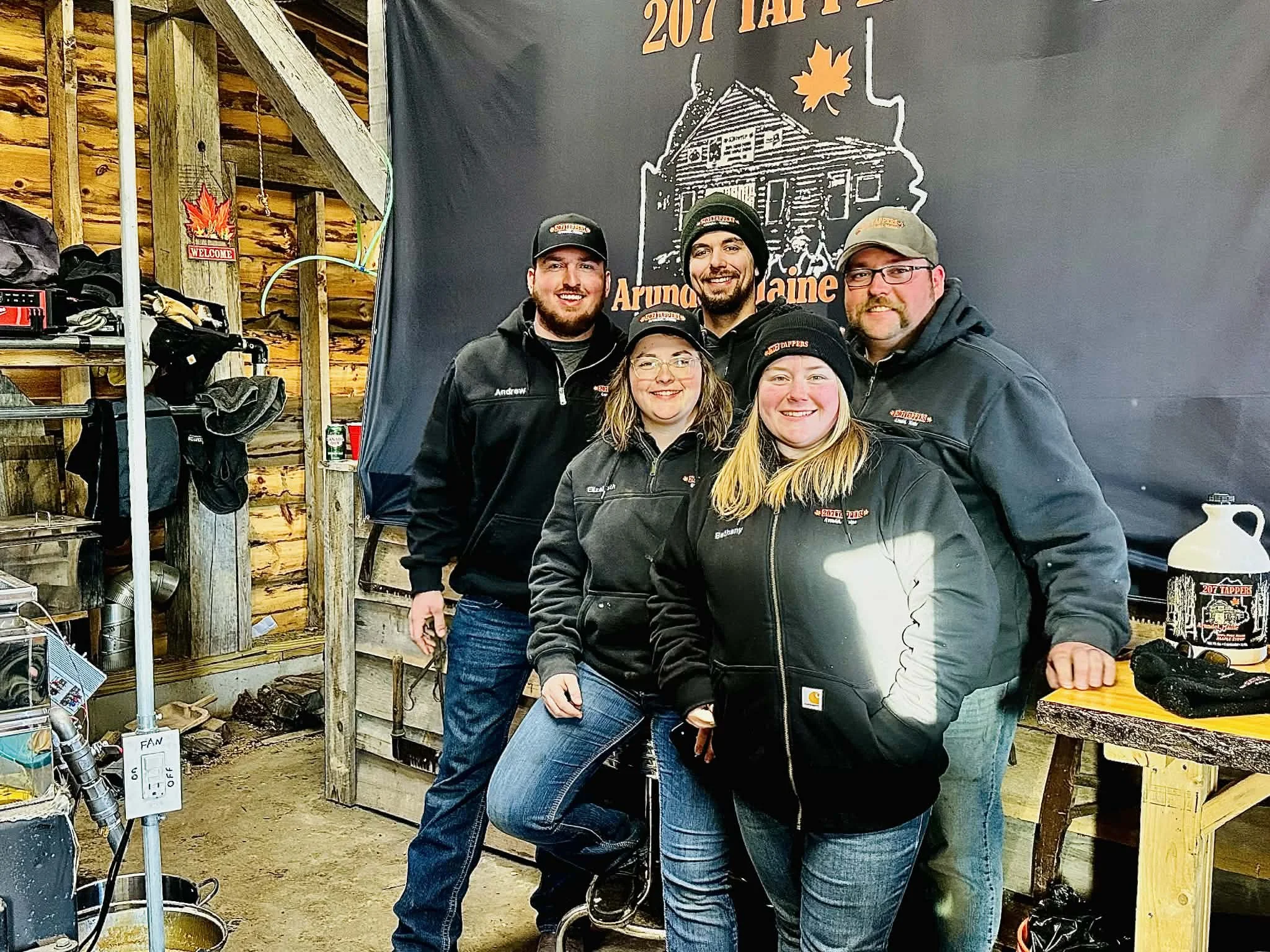
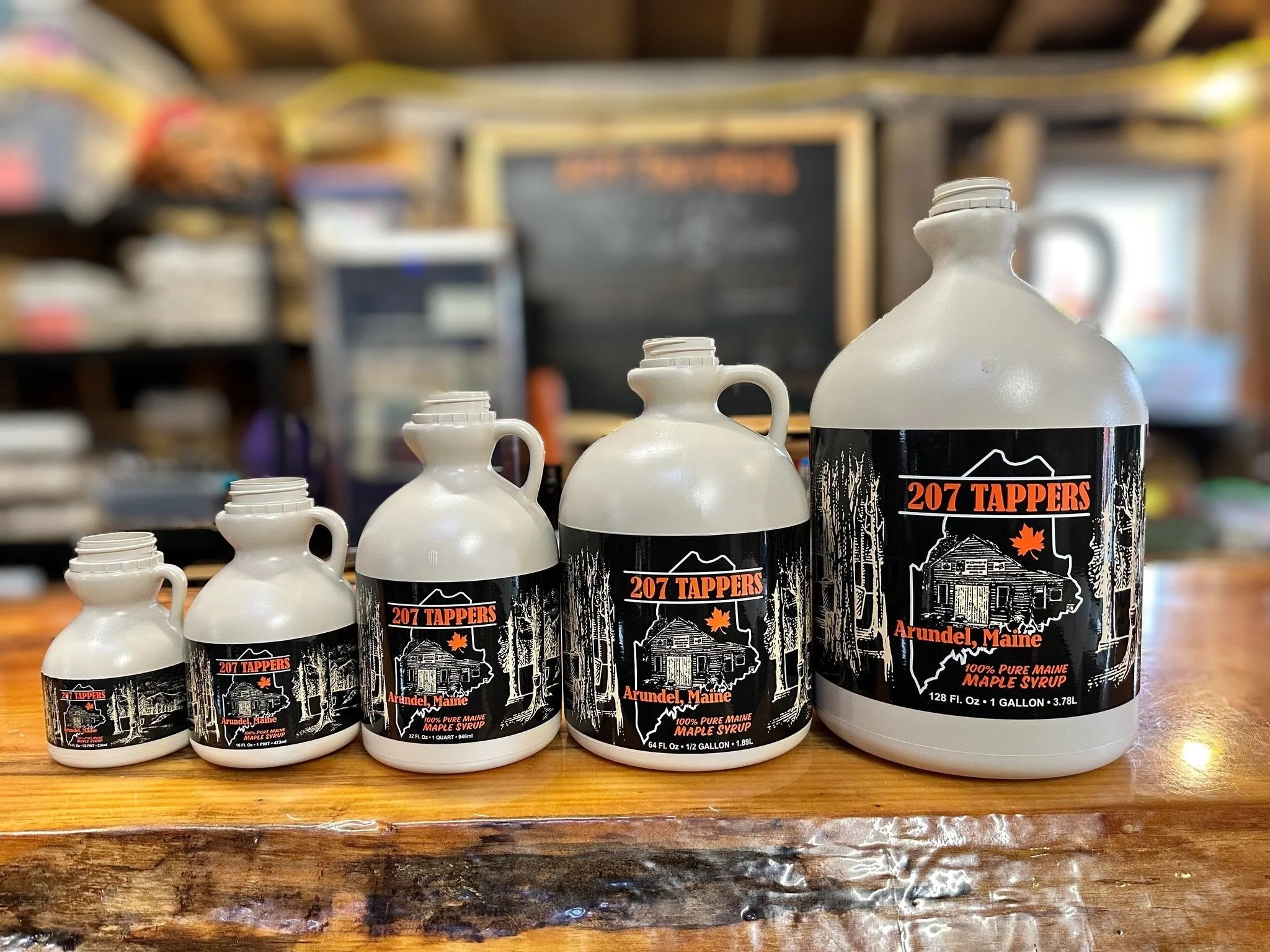
Casey’s team (Tappers 207) is a fun and joyful mixture of family and friends. His wife Elizabeth, a young mother of two with another due in mid-summer, is called “the organizer.” She and her best friend Bethany (expecting twins in the fall!) clean and fill the half-gallon, quart, pint and half-pint bottles, “among other countless tasks,” she says with a smile. Two of Casey’s best buds, Brandon and Andrew, assist in the tapping and boiling process, and keep the wood fire stoked. Listening to the joking and laughter of the group, it’s evident there is no “I” in this team.
Casey’s plans for the future are to increase his current 1000 taps to 3500 “within a few years.” He cherishes teaching the next generation — his two kids, Loretta and Bo — the steps involved in this cherished craft. “It’s just a whole lotta fun and I do it all for and with my family and friends — that’s the best!”